Dire Sheikh Hussein
Ethiopia’s Sacred Beacon of Spiritual & Architectural Heritage
Welcome to Dire Sheikh Hussein Heritage Portal
Embracing Centuries of History, Faith, and Culture
Step into the sacred world of Dire Sheikh Hussein—a profound 13th-century Islamic and Sufi heritage center nestled in the Bale region of southeastern Ethiopia. Recognized on the UNESCO World Heritage Tentative List, this historic site stands as a timeless symbol of peace, spiritual devotion, and architectural wonder.
Whether you are exploring our ancient shrines, studying our rich traditions, or discovering our preservation efforts, we invite you to experience the enduring legacy of Sheikh Nur Hussein bin Malka.
Project Governance & Collaboration
ALIPH Foundation
CeSI – Centro di Ateneo per la Solidarietà Internazionale dell’Università Cattolica del Sacro Cuore
- Madda Walabu University (MWU)
- Università Cattolica (UCSC)
- Wako Gutu Foundation (WGF)
Shrine Etiquette & Visitor Guidance
To preserve the sanctity and serene atmosphere of the shrine, visitors are kindly requested to observe standard cultural norms.
| Requirement | Guidance & Details |
|---|---|
|
Footwear
|
Shoes must be removed prior to entering sacred compounds and tomb enclosures. Designated shoe storage areas are located near the entrances.
|
|
Attire
|
Modest clothing is required for all visitors entering the complex.
Gentlemen: Long trousers and sleeved shirts are required.
Ladies: Full-length dresses or skirts and head coverings are required.
|
|
Photography
|
Respectful photography is permitted throughout the public grounds.
Kindly ask for permission before taking photographs of local individuals or active religious rituals.
|
Fast Facts & Site Details
Essential geographic, architectural, and cultural highlights of Dire Sheikh Hussein
Geographic Location
Border of West Hararghe and Bale Zones, Oromia Region, southeastern Ethiopia (near Wabi Shebelle). Coordinates: 7°45' N, 40°42' E.
Foundation Era
Established during the 13th century by the renowned Islamic scholar and Sufi mystic Sheikh Nur Hussein bin Malka.
Biannual Pilgrimages
Held twice a year during the Islamic months of Dhu al-Hijjah (Hajji) and Rabi' al-Awwal (Mawlid).
Architectural Style
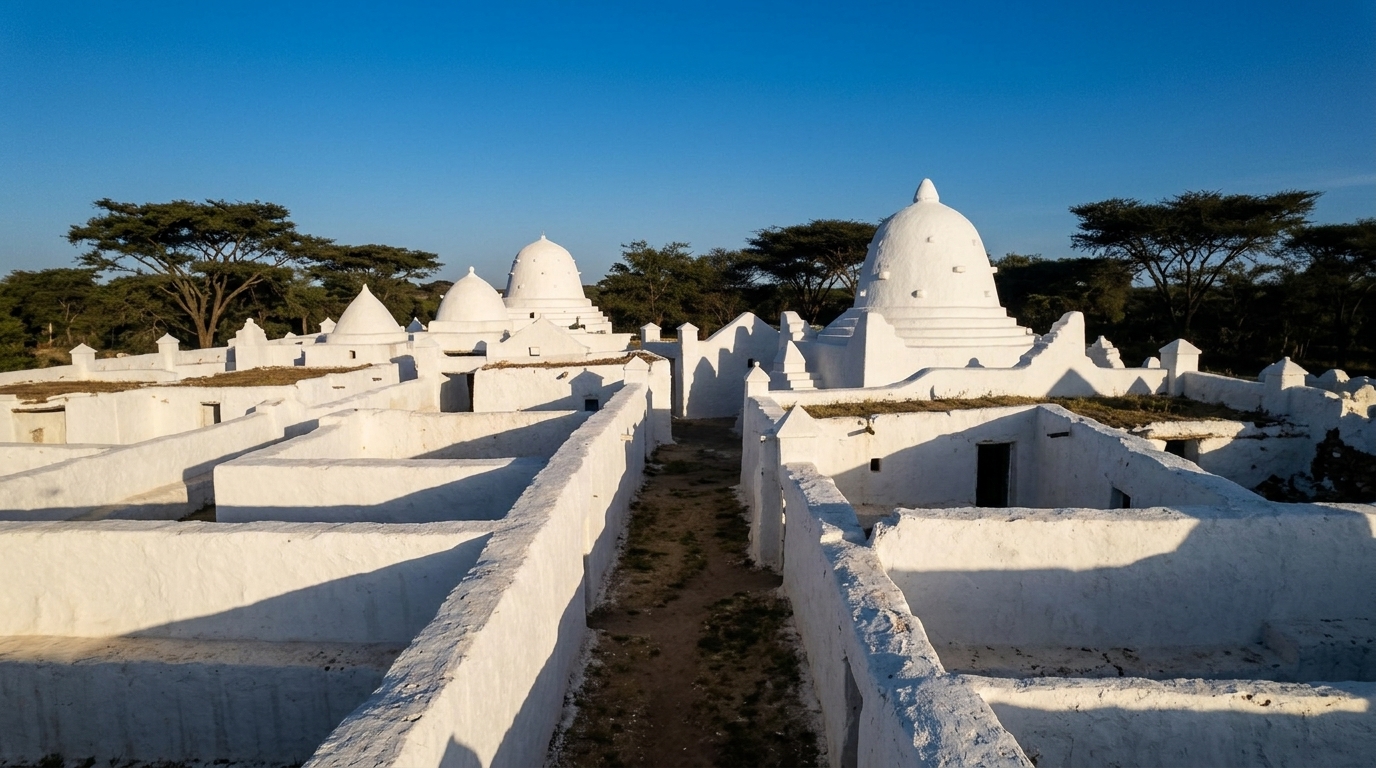
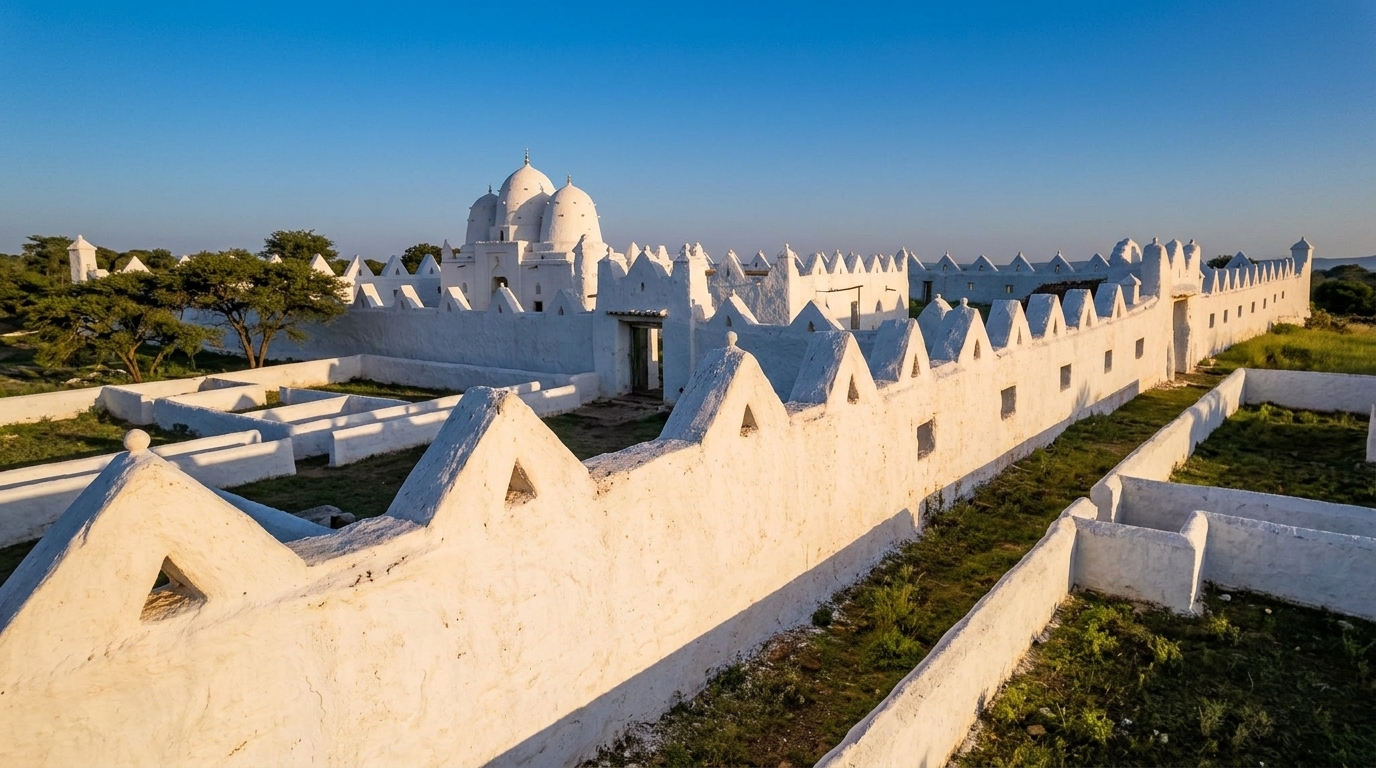
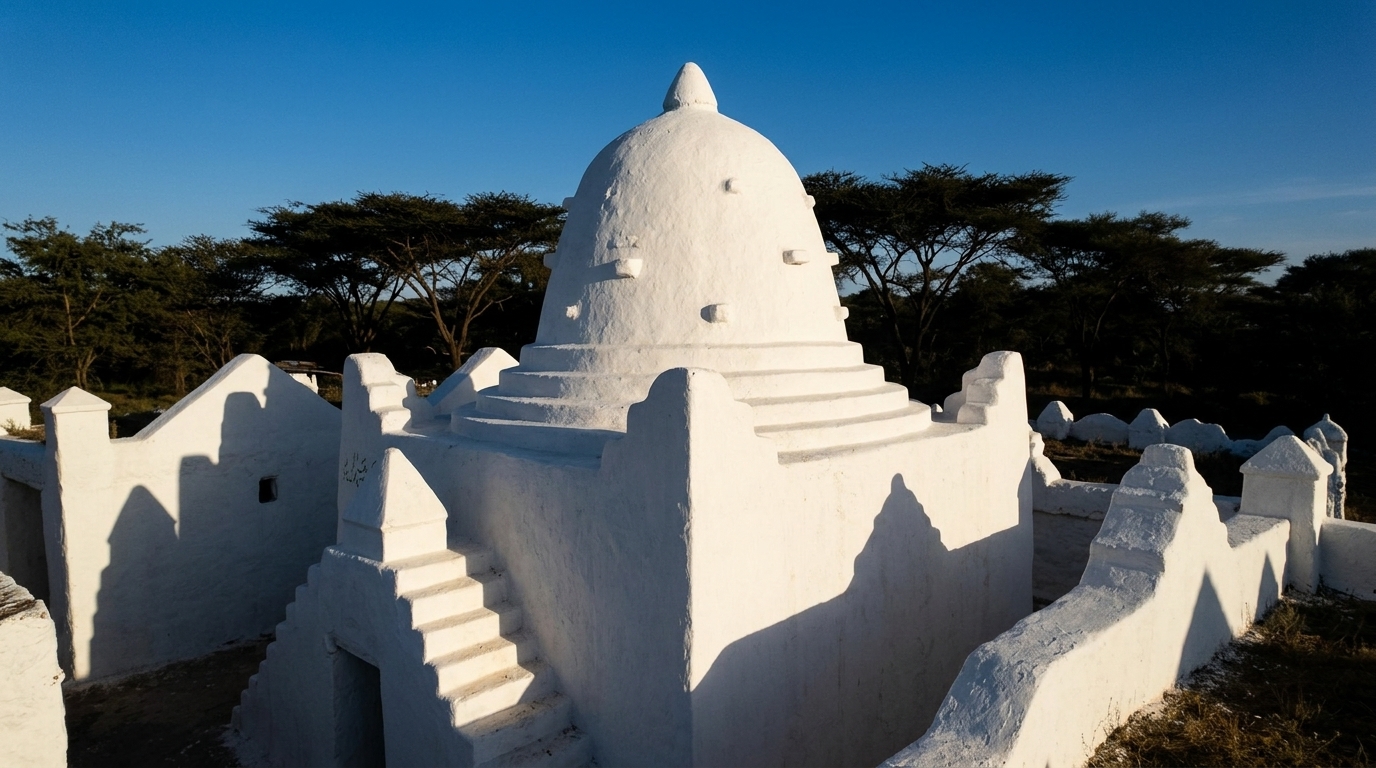
Medieval Islamic architecture characterized by iconic white, conical-shaped domes (Qubbaa or Gamo).
Cultural Symbol
Pilgrims traditionally carry colorful wooden sticks known as Uluma (Oulle Sheikh Hussein) as a symbol of peace.
Sacred Landmarks
Features over 10 major historical monuments, including the Qubba of his parents, Dinkiro spring, and ancient fig trees (Kiltu).
Sheikh Nur Hussein bin Malka
12th–13th century Islamic scholar, Sufi mystic, and saint who played a pivotal role in introducing Islam in southeastern Ethiopia.
Historical Life & Origins
Late 12th to early 13th centuries mission timeline.
Born at Anajina to father Malka and mother Makida.
Spread Sufi philosophy, moral virtues, and peace across Bale.
The Sacred Shrine of Anajina
White, conical-shaped domes (Qubbaa) built over tombs in the river valley.
Tens of thousands visit during Dhu al-Hijjah and Rabi' al-Awwal.
Dire Sheikh Hussein At A Glance
Core historical, geographical, and demographic statistics of the sacred shrine complex.
13th Century
Era of foundation by the revered scholar Sheikh Nur Hussein bin Malka.
900+ Years
Age of the sacred heritage complex and its surrounding monuments.
50,000+
Annual pilgrims visiting the complex during major festivals.
10,000+ m²
Area enclosed by the central stone perimeter wall surrounding the main Qubba.
1,386 Meters
Elevation above sea level in the Bale region river valley.
2011
Year inscribed on the UNESCO World Heritage Tentative List.

Why the Heritage site is important?
Why the site is important?
- 1
It is the earliest, largest, and most renowned medieval Islamic sanctuary and pilgrimage center in southeastern Ethiopia (Bale Zone), spanning over 800 years of history.
- 2
It was founded in the 13th century by the scholar, missionary, and wali Sheikh Nur Hussein ibn Ibrahim al-Malakai (the 12th descendant of Abu Talib, revered as the “Light and King (Garada) of Bale”).
- 3
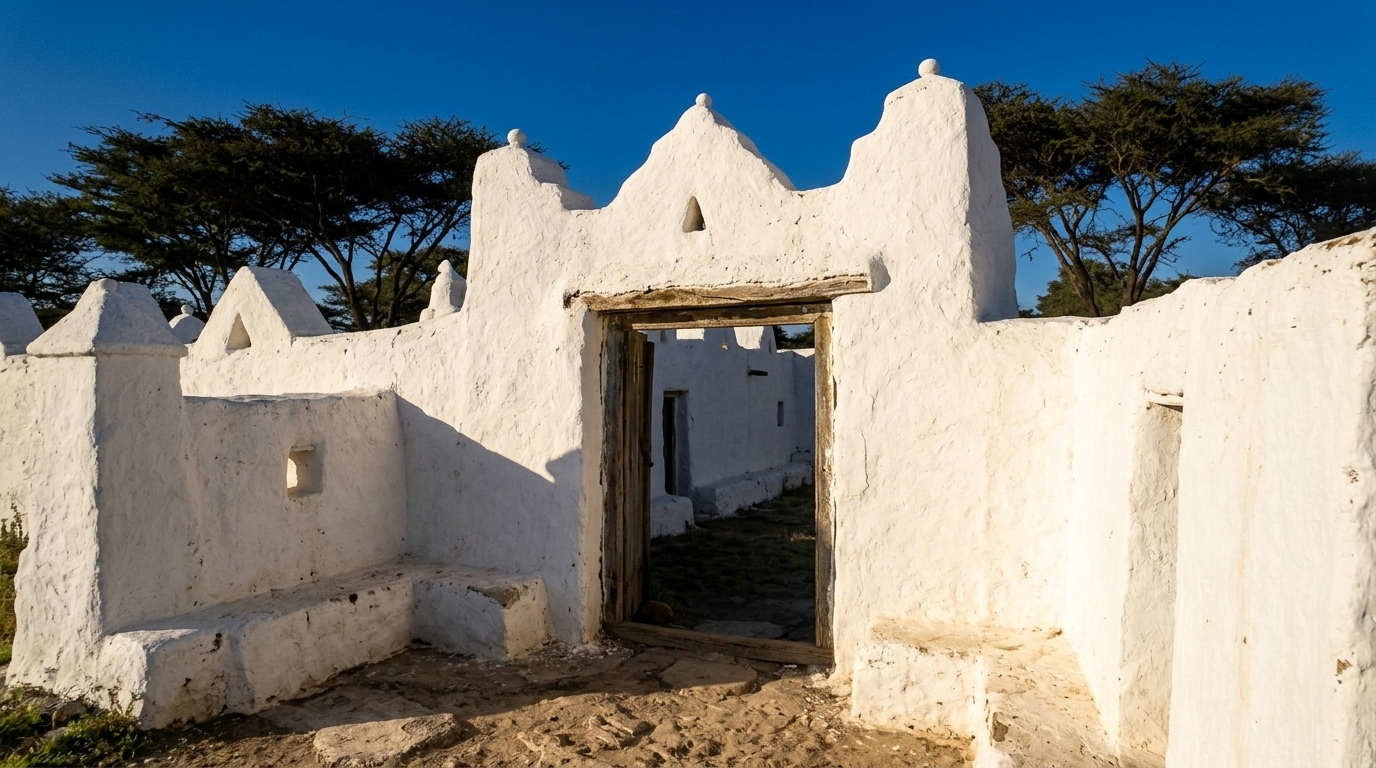
It serves as a sprawling 94-square-kilometer cultural landscape encompassing ancient dry-stone structures, sacred caves, springs, and remarkable white gypsum-plastered architecture like the Ziqtum mosque and cupola-domed tombs (gamos).
Values it represents
- ✓
Spiritual and Historical Value: It preserves a rich hagiographical and oral tradition chronicled in texts like Rabi al-Qulub, documenting early Islamic education and state-building within the medieval Sultanate of Bale.
- ✓
Intangible Cultural Heritage: It maintains vibrant living traditions, including biannual mass pilgrimages by the gariba, rhythmic hadra chanting circles, and multilingual baaroo poetry chanted in Arabic, Oromo, Amharic, and Somali.
- ✓
Interfaith and Cultural Synthesis: It symbolizes a profound historical blending of Sufi Islamic practices with indigenous Oromo traditions (such as the muudaa pilgrimage), fostering a legacy of multi-ethnic harmony, peace, and shared communal alms (sadaqa).
- ✓
Global Significance: It holds Outstanding Universal Value, reflected by its inclusion on Ethiopia’s UNESCO Tentative Heritage List.
What threats it faces?
- ✓
Environmental and Climate Pressures: The site faces acute structural risks from climate-induced challenges, including intense seasonal torrential rains, flash flooding, rapid soil erosion, deforestation, and vegetation loss across its semi-arid lowlands.
- ✓
Material Degradation: Extreme weather cycles and rising temperatures accelerate the deterioration of traditional lime-and-mud mortars, causing wall cracking and moisture damage to historic timber-beamed roofs.
- ✓
Social and Ideological Pressures: It confronts external ideological pressures from purist movements targeting Sufi saint veneration and syncretic traditions as unwelcome innovations (bida), which has led to social friction, the marginalization of visiting gariba, and threats to ancestral camping sites (Ujubas).
Why continued attention, collaboration and support are needed?
- ✓
Continued support and international collaboration are essential to secure fragile physical structures against ongoing environmental degradation and climate-driven flooding.
- ✓
Collaborative efforts and research partnerships are necessary to protect intangible traditions, archive endangered oral histories, and counter ideological pressures aimed at erasing syncretic heritage.
What is being done to safeguard it?
- ✓
Multi-Stakeholder Frameworks: Collaborative initiatives are driven by academic institutions like Madda Walabu University (MWU), regional bodies like the Oromia Culture and Tourism Bureau (OCTB) and the Authority for Research and Heritage Conservation (ARHC), alongside international partners such as ALIPH.
- ✓
Conservation and Community Action: Ongoing project interventions focus on structural stabilization, hydrological management to combat flood erosion, oral history documentation, and empowering local site custodians (darga) in traditional lime-plaster maintenance techniques.